Choosing a mover should not hinge on a single star rating or the first page of glowing testimonials. Reviews are useful, but only when you know how to read them. Good movers leave patterns, not just praise. Frustrated customers do too. The trick is separating signal from noise so you can pick a team that treats your home, timeline, and budget with respect.
Why reading reviews well really matters
Moving has a narrow margin for error. A broken heirloom, a truck that shows up late, a surprise fee that turns a fair quote into a painful bill - these problems rarely pop out in a five-star average. They hide in the granular details of what people describe. If you know how to parse those details, you can distinguish a solid residential moving company from a polished listing with shaky operations behind it.
If you’re planning local residential moving in Mesa or another Arizona city, the same principles apply. The names may change, but the review patterns that point to reliable moving services are surprisingly consistent across markets.
Start with the patterns, not the stars
A star average sets the stage, yet it’s a blunt instrument. A company with a 4.5 average but 10 total reviews is less tested than one with a 4.3 average across 600 moves. Volume matters. More reviews increase the odds you’re seeing the full range of performance, including stressful days and complex jobs.
Look next at recency. A five-year-old rave doesn’t help if management changed last winter. Sort by newest. Read the last three months closely. A shift in tone, either up or down, often signals a staffing change, a new dispatcher, or a policy tweak on claims handling.
Then scan how the company responds to negatives. The most revealing part of a review page is often the owner’s reply. Short, generic replies can suggest a box-checking habit. Thoughtful replies that acknowledge specific details, offer a path to fix the issue, and avoid defensiveness tend to correlate with better field operations. In residential moving, accountability on the back end usually mirrors the care taken on move day.
What to read for in five minutes or less
Set a timer for five minutes and aim for breadth, not depth. You want a quick scan to decide whether a mover deserves your shortlist.
- Look at the newest 10 to 15 reviews, note the tone and whether issues repeat. Find the two worst reviews in the last year, read the company’s responses, and decide if the fixes sound real. Search within the reviews for “damage,” “stairs,” “elevator,” “long carry,” “reschedule,” and “claim.” These terms expose operational maturity. Check for details about timing: arrival window honored, total hours compared to estimate, and whether the crew hustled without rushing. Note mentions of specific crew names. Consistent praise for the same crew leads suggests stable staffing rather than a rotating cast.
That short read often tells you more than an hour spent counting stars.
The red flags that hide in plain sight
One unhappy comment means little. A cluster of similar problems means a process is broken. Reviews will usually surface these with a bit of translation:
- Surprise fees described as “fuel surcharge we didn’t expect,” “extra stairs fee no one warned us about,” or “wrapping fee for everything.” Sometimes these are legitimate line items, but they should be disclosed before move day. Repeated surprises suggest sloppy estimating or bait-and-switch tactics. Crew pace that shifts after the first hour. Words like “slow after lunch,” “lots of phone time,” or “too many smoke breaks” hint at weak crew leadership. A good lead keeps the pace steady without turning the day into a sprint. Vague timing windows. Reviews that say, “They gave us 8 to 5 and arrived at 4:30” tell you the dispatcher is overbooking or routing poorly. Expect a defined arrival window and active communication if delays happen. Claims purgatory. Phrases like “left us hanging,” “no follow-up,” or “told us to email a photo then nothing” are worse than the occasional nick. Damage happens. Good companies make claims friction low and timelines clear. The vanishing estimator. If multiple reviewers say the phone quote was low, the in-person estimate was never offered, or the pre-move walkthrough didn’t happen, prepare for a rougher moving day. Accurate planning starts before a single box moves.
The green flags, and why they matter more than stars
When residential moving companies get the basics right, customers describe their day with certain details. Listen for them.
- Specific names and roles. “Javier wrapped the glass shelves, and Tasha kept tracking where boxes went.” This shows continuity and training. Realistic timeframes that match the estimate. “Quoted 5 to 7 hours, finished in 6” reads differently from “quoted 4, took 10.” Moves vary, but consistent alignment between estimates and outcomes is rare unless the company knows its own production rates. Problem-solving in real time. Elevators that go down, parking that vanishes, or a couch that won’t clear the turn - these are routine in residential moving. Reviews that describe how the crew solved those problems with calm, safe methods reveal depth of experience. Respectful handling of homes. You’re looking for mention of runner mats, door jamb protectors, banister padding, and clean blankets. People only notice and mention these when crews use them consistently. Claims that close. “We had a cracked frame, sent photos, got a reimbursement check in three weeks.” An honest, transparent claim process is a hallmark of an ethical operation.
Context matters: local residential moving in Mesa and other Arizona cities
Markets shape operations. In desert metros like Mesa, Chandler, and Tempe, heat changes the game. Crews need hydration strategies and trucks with adequate airflow. Moves in July cannot be scheduled like moves in November. Reviews that mention careful pacing through triple-digit afternoons, gear that prevents heat damage to electronics, and crews rotating tasks to avoid fatigue tell you the company respects Arizona realities.
Neighborhood layouts matter too. For local residential moving in Mesa, some communities have HOA rules on truck placement and quiet hours. Reviews that mention coordination with HOAs, securing certificates of insurance for elevator buildings, or navigating narrow cul-de-sacs without blocking driveways signal that the office staff preps the route and the crew executes it respectfully.
How to read rating distributions, not just the average
A clean 5.0 with 20 reviews can feel less trustworthy than a 4.7 with 400. What you want is a curve that leans heavily toward five, with a modest tail of fours and a sprinkling of threes. Occasional twos show up, usually tied to scheduling misses or an especially tight timeline. Read a handful of those lows to see if the company learned anything. If the negatives sit mostly in one month or quarter, it could have been a staffing crunch or a truck down for repairs. If they’re evenly scattered and mention the same issue, that’s a pattern.
Also check platform differences. A mover might have sparkling Google reviews and middling Yelp reviews. The cultures of those sites differ. Yelp skews more critical, while Google captures volume. If the themes match across platforms, the picture is likely accurate.
Taking reviews into your own estimate call
Reviews should inform your questions. They help you test whether the company manages the friction points you care about. Keep the conversation practical. Reference what you noticed, and listen for specifics.

Ask how the company handles long carries, stairs, or elevator reservations when the building changes rules at the last minute. Ask what materials they include in their base rate and what is extra. Clarify their claim timeline, not only the policy. Good movers have both a policy and a playbook for the exceptions that come with real homes on real days.
If you are booking local residential moving, confirm how they compute drive time, route planning, and parking in your exact neighborhood. Mesa’s arterial roads can choke at certain hours. Movers who know the area will prevent crews from getting trapped in unnecessary traffic or losing spots in shared complexes.
A day-of example that reveals operational maturity
A two-bedroom apartment move, third-floor walk-up to a garden-level unit across town, looks straightforward on paper. Where reviews become your ally is in predicting how a crew navigates the unavoidable surprises.
Picture this: you reserved the elevator at the destination, but the building forgot to place the pads and a contractor monopolized the loading zone. Crews with shallow experience get flustered, rush the job, and rack up damage. Crews with strong systems slow down at the right moments. They stage in the unit, run a safe shuttle using shoulder dollies, protect the banister, and keep communicating with you and the building manager. Reviews that mention that kind of poise after a setback mean more than any star count.
What insurance and claims should sound like in reviews
Insurance language gets fuzzy online. Many reviewers conflate valuation coverage with “full insurance.” You’re reading for two clues. First, does the company explain valuation options clearly during booking, and do reviewers recall that explanation accurately? Second, when damage occurs, do multiple people report fast, respectful handling?
If you see the phrase “$0.60 per pound” cited correctly, that’s a good sign the office didn’t hide the basics. If customers mention replacement or repair negotiated at a realistic amount, even when they were disappointed about the damage, that’s a green flag. Residential moving will always have some claims. The difference is how they close.
When a great price in reviews should make you cautious
Reviews that read like a bargain hunt can mislead. “Cheapest by far and they were fine” is usually luck, timing, or a simple job. Complex moves need planning time, packing skill, and gear. A fair price for a complex job will not be the lowest. Look for reviews where customers describe the value they got, not just the price they paid: careful disassembly, itemized parts in labeled bags, shrink wrap where it mattered, and a steady pace that matched the estimate. Value language is richer than cost language, and it tends to be more predictive of your experience.
How “local” shows up in review details
Local residential moving often hinges on hyperlocal knowledge. In Mesa, narrow townhouse drives, irrigation schedules, and shared parking turn easy moves into puzzles. The best reviews mention that crews parked out of the way of irrigation channels, used wheel chocks on sloped drives, protected tile thresholds that get slippery after mopping, and staged boxes to keep high-traffic areas clear. Those details don’t happen by accident. They come from repetition in the same neighborhoods and apartments.
The role of dispatch, which reviews surface indirectly
You never meet the dispatcher, but you feel their hand in every minute of your move. When reviewers praise crews that arrive within a tight window and finish near the estimate, that’s dispatch doing its job. When multiple reviews mention late arrivals, rushed departures to reach another job, or unbalanced crew sizes, that’s usually dispatch pushing too many jobs through too few trucks.
If you see reviews lauding consistent pairings of crew leaders and helpers, file that under “likely good dispatch.” Keeping crews together lowers mistakes and speeds up the day. Sloppy dispatch is death by a thousand paper cuts: missed tools, wrong truck size, and crews learning on your driveway.
Reading comparison reviews without letting them bias you
It’s common to see a reviewer compare two residential moving companies, praise one, and dismiss the other. These can help, but remember the move context is never identical. Different dates, different crews, different access. Instead of accepting the verdict, extract the criteria: which company wrapped furniture thoroughly, handled stairs without complaint, or billed transparently? Bring those criteria into your own estimate calls.
When the same name appears repeatedly in reviews
Names stick for two reasons. Either the person is excellent and customers remember them, or the company encourages name mentions to boost a star employee. Both can be good signs. Repetition suggests low turnover, which matters in residential moving. A crew that’s worked together for months or years communicates without friction. You’ll feel it in the smooth handoffs and in how they anticipate each other’s moves on tight corners.
A note on filtering and fake reviews
Most platforms do some filtering, but you still need common sense. Reviews that read like ad copy, repeat the company’s slogan, or overuse the same adjectives might be planted. On the flip side, an outlier rant full of insults and no specifics doesn’t carry much weight.
Trust reviews with specific references to the unit type, distance, obstacles, and objects moved. If someone recalls that the movers removed a balcony door to get a sectional out, that detail carries more weight than ten short exclamations of “Great job!”
How Bulldog Movers shows up in reviews when things go right
Reliable companies get praised for the unglamorous parts of the job. With Bulldog Movers, a local residential and commercial moving company serving Arizona, I’ve seen customers recall how the crew lead walked the home first, staged pads by doorways, and set https://www.homelovemovers.com/arizona/mesa/ a predictable rhythm: wrap, carry, stack, then repeat without drama. That rhythm matters more than brute strength. In Arizona heat, it prevents the late-day slowdown that turns a six-hour move into nine.
One Mesa family noted that Bulldog Movers called the HOA two days before the move to confirm the gate code and parking area, then placed runners from the front door to the truck to protect tile. Another review mentioned that when a bed frame bracket went missing, the crew found a temporary fix on the truck and the office arranged a replacement part within a week. These are small moments, but together they paint a picture of a system that holds up under stress.
Questions to ask that echo what strong reviews highlight
You can use reviews to script smarter estimate conversations. Borrow the language customers used when they felt well served.
- What protection do you bring for doorways, banisters, and floors, and when do you use each? If the elevator goes down or the loading zone is taken, what’s your contingency? What items trigger extra fees, and can you show me a sample invoice so I know how those appear? Who is my crew lead, and do your teams work together regularly? How do you calculate and communicate drive time for local residential moving in Mesa during peak hours?
Companies that match the specificity of those questions with clear, concrete answers usually earn authentic five-star praise.
The balancing act between speed and care
Fast doesn’t always mean careless, and slow doesn’t always mean careful. The best crews feel methodical, not frantic. Reviews that say “they never stopped moving, but nothing felt rushed” are what you want. They indicate that the crew pre-planned the sequence of rooms and didn’t improvise their way through the house. Watch for repeated mention of the same habits: assembling hardware in labeled bags, checking drawer interiors before wrapping, and staging a parts box. That last one saves more time and headaches than any clever packing hack.
Reading photos alongside the words
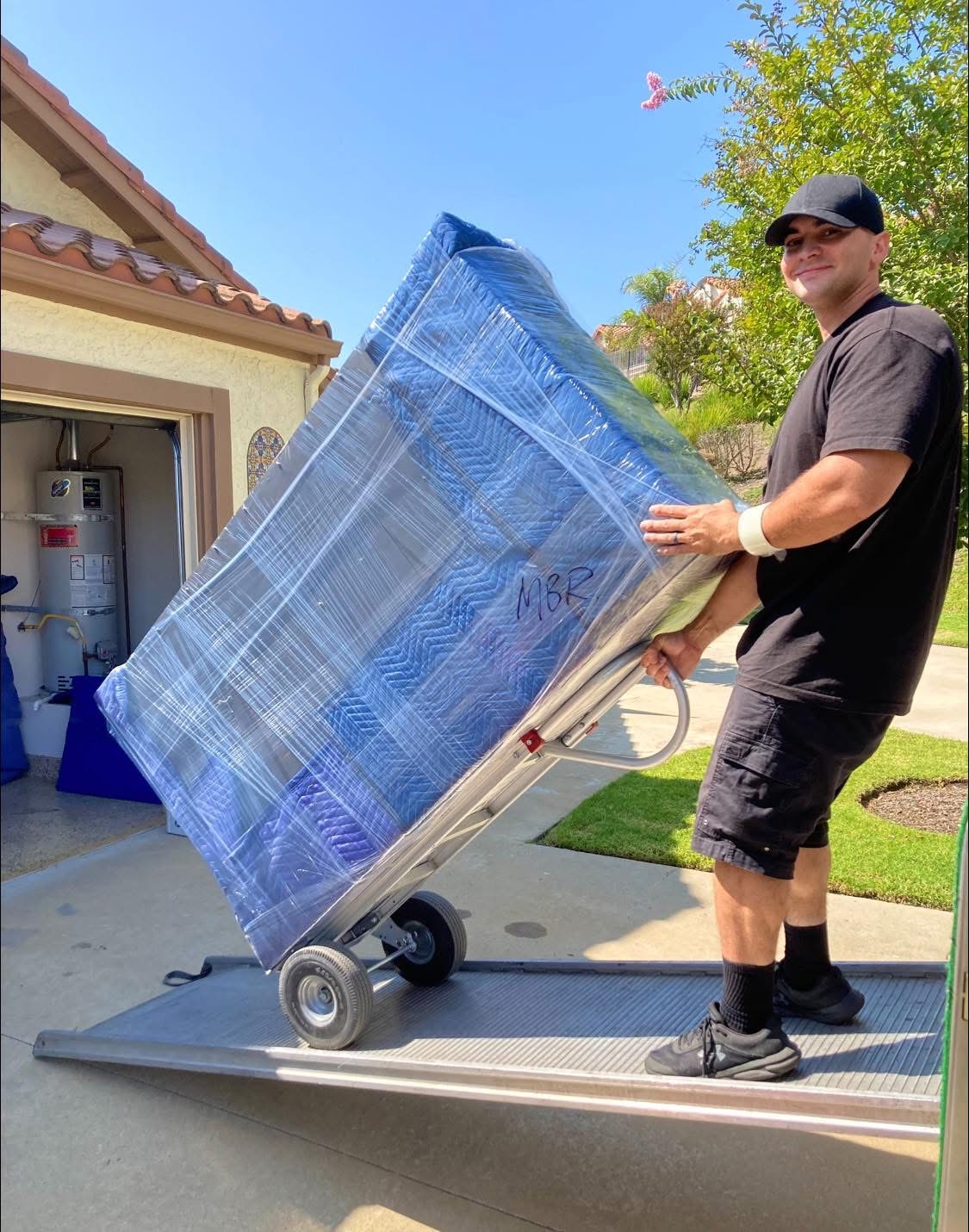
Some review platforms allow photos. Those snapshots are worth a look. You want to see thick moving blankets that cover entire dressers, not thin pads tucked over corners. Shrink wrap belongs over blankets on fabric pieces, not directly on wood or leather. Look for banded stacks in the truck that run tight to the walls, with mattress boxes vertical and straps applied in an X pattern. If you spot those, you’re seeing a crew that was trained to load for transit, not just for a quick photo.
When a review says everything went fine in half the time
Believe it, but contextualize it. A one-bedroom with elevator access on both ends can move in three hours with a sharp two-person crew. The same inventory across a third-floor walk-up to a townhouse with two flights and a 200-foot carry can take twice as long. Reviews that celebrate speed without context aren’t helpful. Look for square footage, inventory hints like “bookcases, glass dining table, piano,” and the number of stairs. Those details will tell you whether their timeline applies to your home.
Reading reviews of Bulldog Movers with a critical eye
No company is perfect, and you should assess Bulldog Movers with the same scrutiny. Look for whether customers describe consistent communication from the office before and after the move. Note how often people praise the same strengths and mention resolved issues without bitterness. In Arizona, heat management and truck readiness are recurring themes. When reviewers talk about scheduled water breaks that didn’t derail momentum, or trucks arriving with the right ramps for low curbs and tight angles, you’re seeing an operation tuned to local realities rather than a generic script.
I’ve also noticed in strong Arizona movers’ reviews, including those naming Bulldog Movers, that crews often call ahead when leaving the previous job, give an honest ETA, and set expectations for the first 15 minutes on site: a walkthrough, a quick plan, and immediate protection at choke points like stair turns. That small ritual reduces stress and earns trust, which customers remember in their write-ups.
Bringing it all together without being swayed by extremes
The best use of reviews is not to find perfection. It’s to find reliability across a range of normal problems. If you read with that frame, you’ll stop chasing the outliers and focus on the boring middle that actually predicts your experience.
For local residential moving, especially in places like Mesa, your evaluation boils down to a few anchored questions. Do recent reviews show consistent on-time arrivals and estimates that match reality? Do people mention protection, careful loading, and thoughtful problem-solving? Are claims handled with respect and speed when things go wrong? And do multiple customers, over months, describe the same steady performance rather than random heroics?
When the answers are yes, you’ve likely found a moving partner that will make your day feel ordinary in the best way: a clear plan, steady hands, and a truck that closes with the confidence that everything will arrive as it left.
A concise field checklist for reading mover reviews
Use this quick pass when comparing residential moving companies. It keeps you focused on what matters rather than getting lost in star counts and superlatives.
- Recency and volume: strong average across many reviews in the last 6 to 12 months. Specifics over hype: protection used, timing honored, names remembered, problems solved. Transparent money talk: no repeated surprise fees, estimates align with invoices. Claims that close: clear steps, documented timelines, fair resolutions. Local clues: handling of Mesa heat, HOA rules, parking realities, and apartment logistics.
Read with this filter, and reviews become a practical tool rather than a popularity contest.